Zendesk AI Agents: Resolve customer requests autonomously

Agentic AI that understands, plans and takes action

Zendesk AI Agents combine approved knowledge and customer data with defined procedures. They recognise which requests they can handle, plan the necessary steps and use APIs to take action in connected systems – autonomously, but within clearly defined boundaries.

With Leafworks, your first AI Agent can go live in around six weeks. We guide you from selecting the first use case through testing and launch.

Zendesk AI Agent in action: Where’s my order? (German with English subtitles, 1 min 30 sec)

Leafworks: Zendesk Premier Partner
Zendesk Implementation Partner
Zendesk AI Agents

How Zendesk AI Agents automate end-to-end service processes

A Zendesk AI Agent can handle suitable requests from start to finish, even when resolving them requires several steps. It identifies the customer’s intent, uses approved knowledge, asks for missing information and then takes the necessary actions in Zendesk or connected systems.

If a request requires human support, the AI Agent hands it over to the right team with all the information collected and the full conversation context.
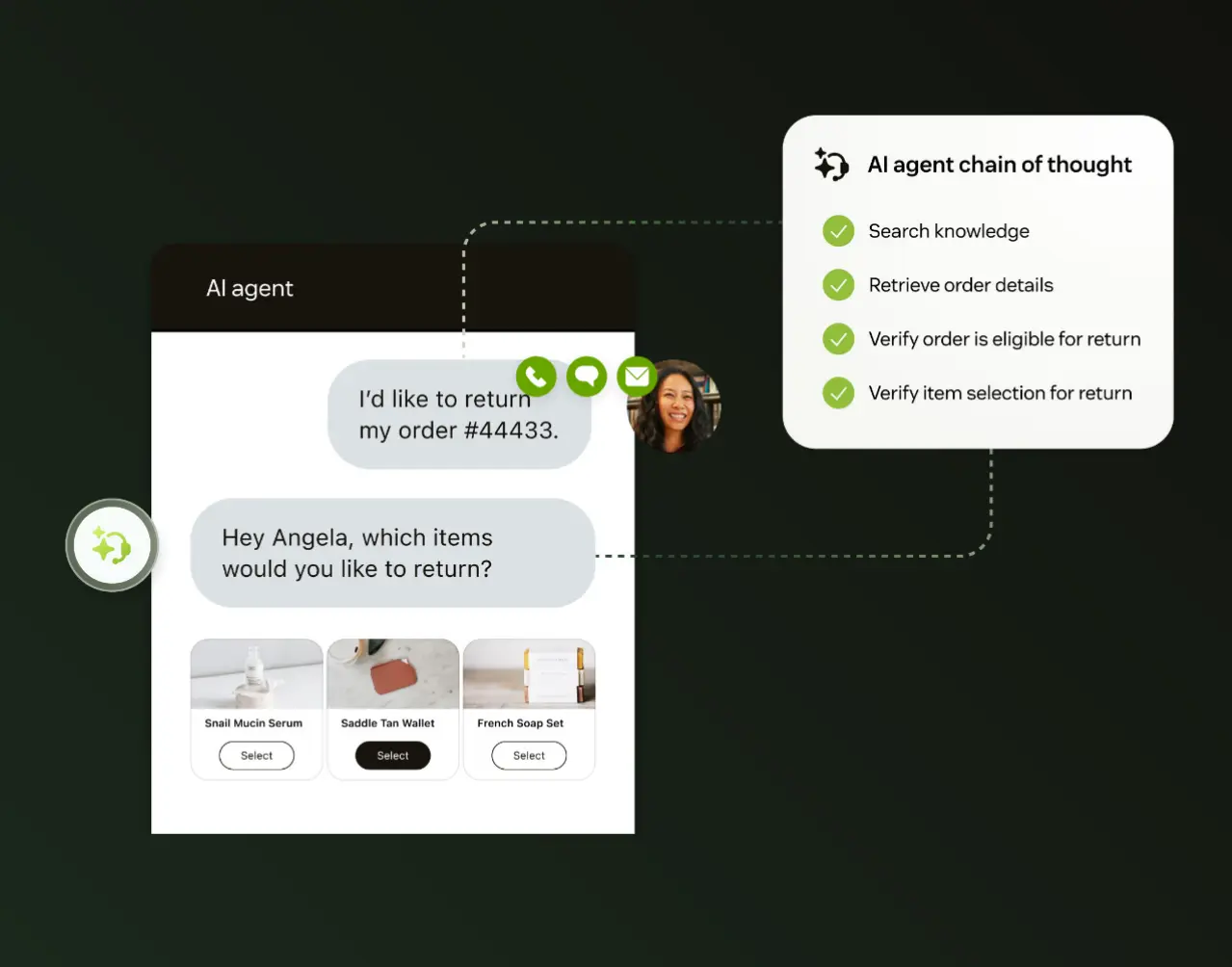
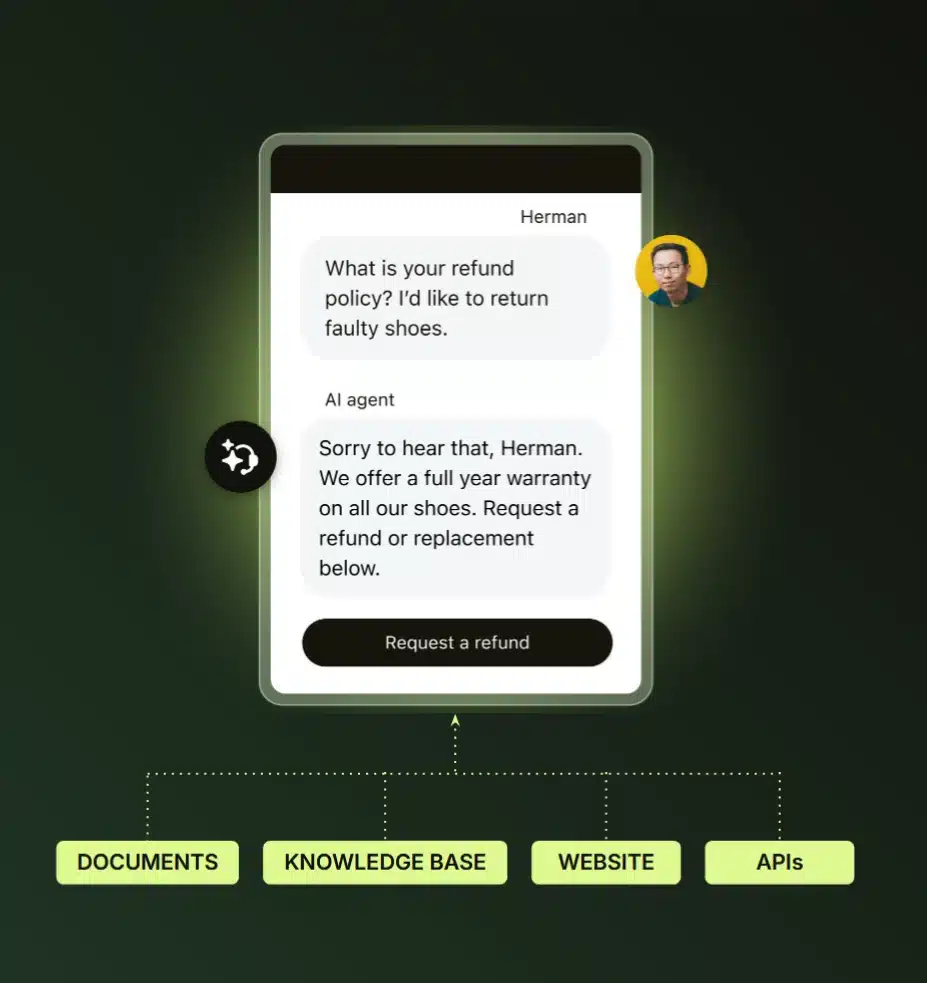
Zendesk AI Agent checking order details and return conditions

Four building blocks for agentic service workflows

For each use case, you define in advance what the AI Agent should recognise, know and be allowed to do. Four connected building blocks provide the foundation:

Use Cases

Use Cases define which requests the AI Agent recognises and what the customer wants to achieve.

Knowledge

Approved content from Zendesk Guide and other knowledge sources provides the basis for accurate, relevant answers.

Procedures

Generative Procedures describe the goal, rules and required steps in natural language. The AI Agent can adapt the process to the conversation while staying within those instructions.

Actions

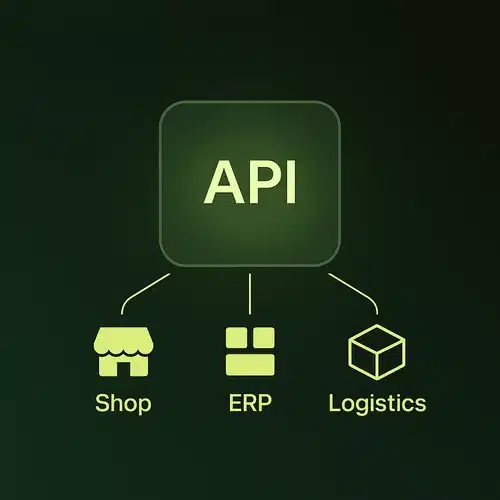
Approved actions and API integrations allow the AI Agent to retrieve data and make defined changes in connected systems.
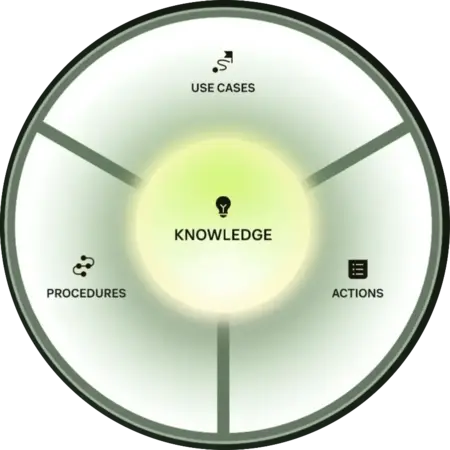
Use Cases, Knowledge, Procedures and Actions as the building blocks of Zendesk AI Agents

Clear boundaries and controlled handovers

Good to know: If the AI Agent cannot or must not complete a request, the service team takes over with all the context collected so far.

Suitable use cases

Which service requests are a good fit for Zendesk AI Agents?

Zendesk AI Agents work best for recurring requests with a clear objective, a defined process, reliable knowledge and accessible data.

Order status and delivery

The AI Agent authenticates the customer, retrieves order and shipping data and provides the current status, delivery date or tracking link.

Authentication + data retrieval

Returns and cancellations

It checks policies and deadlines, collects the required information and can initiate a return, create a return label or process an eligible cancellation.

Policy check + API action

Account and contract changes

After verifying the request and confirming the customer’s identity, the AI Agent can retrieve or update contract details and initiate approved changes.

Verification + system update

Invoices and payments

The AI Agent explains invoice items, provides documents, checks payment status and hands disputed cases over with full context.

Knowledge + account data

Product and service questions

The AI Agent uses approved knowledge sources to answer questions, asks targeted follow-up questions and starts the appropriate procedure when needed.

Knowledge + procedure

Technical first-line support

The AI Agent narrows down the cause through targeted questions, guides the customer through suitable troubleshooting steps and can perform approved actions such as a reset.

Diagnosis + action

How to identify a strong AI Agent use case

The best place to start is a clearly defined request with a process and outcome that can be tested reliably:

  • The request occurs frequently.
  • The objective, rules and possible exceptions are clearly defined.
  • The required knowledge and data are accessible.
  • Success, handovers and errors can be measured clearly.
Zendesk AI Agents in practice

From initial use cases to 35–45 % automation

Since 2023, The Quality Group has worked with Leafworks to develop AI-powered customer service for ESN and More Nutrition. Initial automation for WISMO, FAQs and recurring standard requests was gradually expanded to cover more complex service processes.

35–45 %

of customer requests are now handled automatically, depending on the period and request volume.

> 10,000

requests can be handled automatically in a single week during Black Week, Black Friday and other promotional periods.

~ 10 %

of all requests are now additionally automated through the cancellation process introduced in November 2025.

Automation expanded step by step

2023 0–20 %

Started with the first clearly defined use cases.

2024–2025 25–30 %

Added further standard requests and service processes.

Current level 35–45 %

Expanded into more complex and deeply integrated workflows.

Since November 2025, cancellations have also been automated. This additional use case accounts for around 10 % of all requests now handled automatically.

This shows how Zendesk AI Agents can be scaled in a controlled way, starting with frequent, clearly defined requests and then expanding to additional processes and larger request volumes.

Read the full Zendesk customer story
Next phase

Successful chat automation is being extended to ticketing. The goal is end-to-end automation across the customer service journey.

A clear distinction

Zendesk AI Agent, chatbot or Copilot?

Chatbots, AI Agents and Copilot play different roles, from predefined customer-facing dialogues and autonomous resolution to helping service teams handle requests more efficiently.

Customer-facing and rules-based

Classic chatbot

A classic chatbot guides customers through predefined dialogues and decision trees. Every possible route through the conversation is mapped in advance.

  • It works with fixed questions, options and branches.
  • It is suitable for clearly defined, stable processes.
  • New variations must be added to the dialogue manually.
Customer-facing and agentic

Zendesk AI Agent

A Zendesk AI Agent works towards a defined goal and adapts the required steps to each request while staying within established rules.

  • It uses approved knowledge and current system data.
  • It can carry out multi-step Generative Procedures.
  • It calls APIs and performs approved actions.
Agent-facing and assistive

Zendesk Copilot

Zendesk Copilot supports service teams as they handle requests, while people retain control and make the decisions.

  • Copilot summarises conversations and previous steps.
  • It suggests replies and suitable actions.
  • It supports the team directly in the Agent Workspace.

The previous Essential/Advanced model is being retired

Zendesk is phasing out the previous separation between AI Agents Essential and Advanced. Capabilities such as Generative Procedures, dialogues, actions and API integrations are part of the new AI Agents experience. Existing Essential and legacy bots must be migrated to this new environment. From 31 August 2026, the previous features will receive maintenance only. They will be removed on 10 December 2026, and bots that have not been migrated will stop working. For an overview of Zendesk’s full AI portfolio, visit our Zendesk AI page.

What Zendesk AI Agents can do today

The capabilities available to you depend on the channel, your Zendesk plan and setup. For reliable automation, knowledge, permissions, procedures and integrations need to work together.
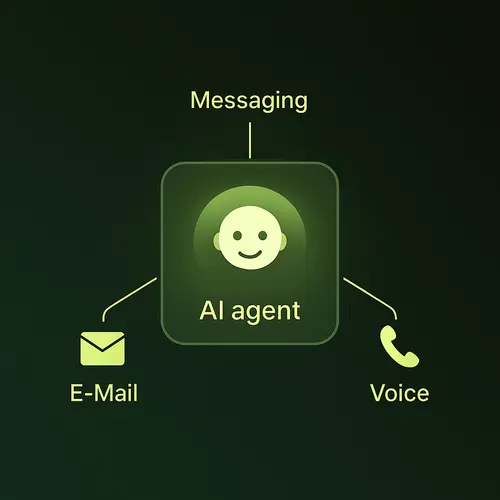
Channels supported by Zendesk AI Agents

Channels

  • Messaging: AI Agents handle suitable requests conversationally across multiple steps.
  • Email and web forms: Incoming requests can be identified, combined with the ticket context and handled automatically.
  • API: The AI Agents API allows AI Agents to be embedded in custom interfaces and applications.
  • Voice: Voice AI Agents remain in the Early Access Program and are not yet a generally available standard feature.

Important: In the new environment, each AI Agent is configured for one channel type. Messaging and email therefore require separate AI Agents.
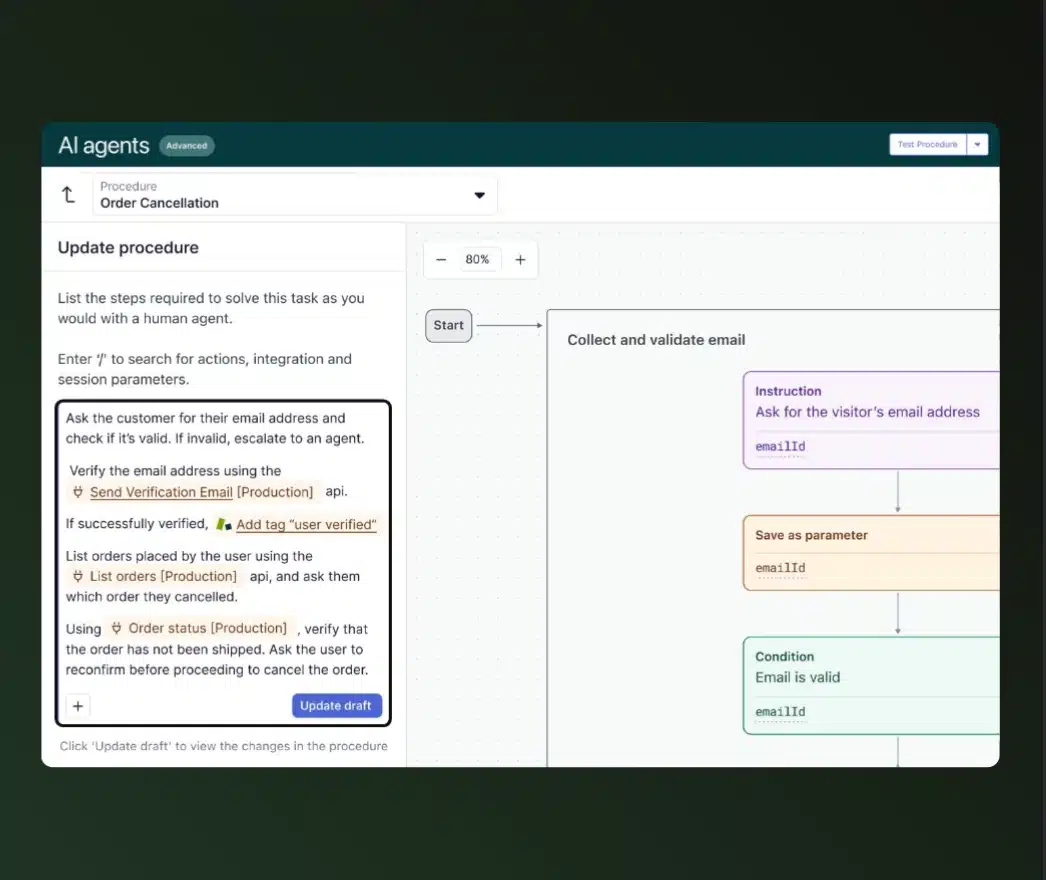
Generative Procedure for a Zendesk AI Agent

Automation & Procedures

  • Admins describe goals, rules, required information and permitted actions in natural language.
  • The AI Agent adapts the individual steps to each conversation while staying within those instructions.
  • It asks for missing information, calls approved APIs and hands over cases it cannot resolve reliably.

Zendesk reports that some companies automate up to 66 % of standard requests from start to finish. View the Zendesk source

Knowledge sources for Zendesk AI Agents

Knowledge & personalisation

  • AI Agents use approved content from Zendesk Guide, websites and connected external knowledge sources.
  • Search rules and permissions control which content can be used for each use case.
  • Tone and response length can be configured for different brands.
  • Zendesk AI Agents support more than 90 languages, including automatic translation.
API and system integrations for Zendesk AI Agents

API & system integrations

  • AI Agents can retrieve data from e-commerce, ERP, CRM, payment and logistics systems.
  • Approved actions can include status checks, address changes, returns or the creation of shipping labels.
  • Endpoints, authentication, permissions and the individual use case determine which data can be read or changed.

Example: An AI Agent authenticates a customer, retrieves the order status through the Shopify or logistics API and sends the relevant tracking link.
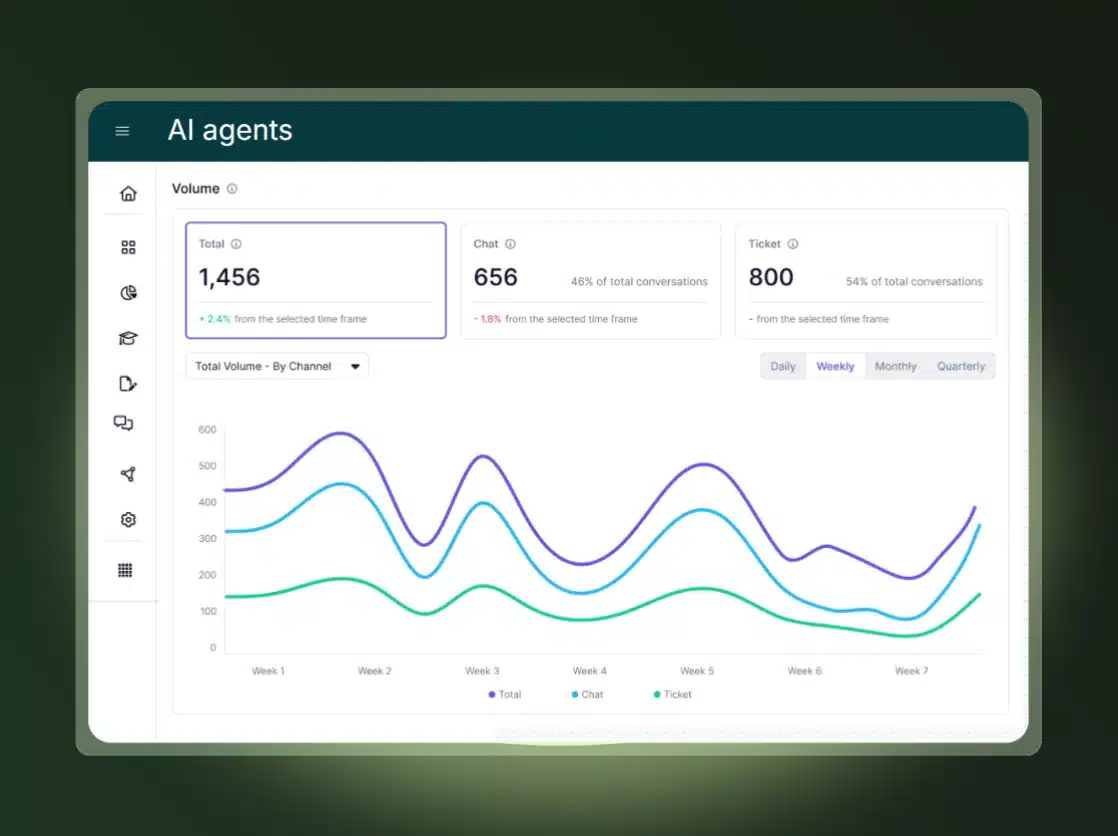
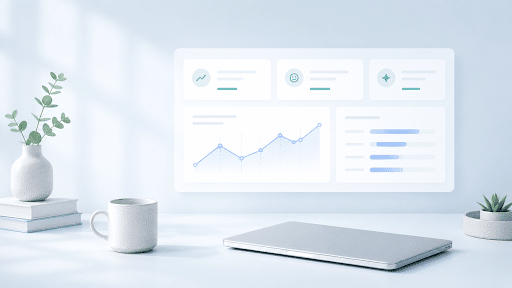
Reporting and quality analysis for Zendesk AI Agents

Reporting & transparency

Dashboards show handled requests, frequent use cases, handovers and knowledge gaps. The different resolution types must be distinguished when evaluating performance:

  • Assisted Escalation: The AI Agent was involved before the case was handed over to the service team.
  • Contained Resolution: The request remained with the AI Agent, but this does not automatically prove that it was fully resolved.
  • Verified Resolution: The resolution meets Zendesk’s verification criteria. Under the new model, only Verified Resolutions count towards the Resolution Allowance.

Some accounts still use Automated Resolutions, while others have already moved to Resolution Allowances and Resolution Tiers. Reporting and billing must therefore be evaluated separately.

Real customer examples: Jigsaw reduced ticket volume by 35 %. Lush achieved a CSAT of 93 %.
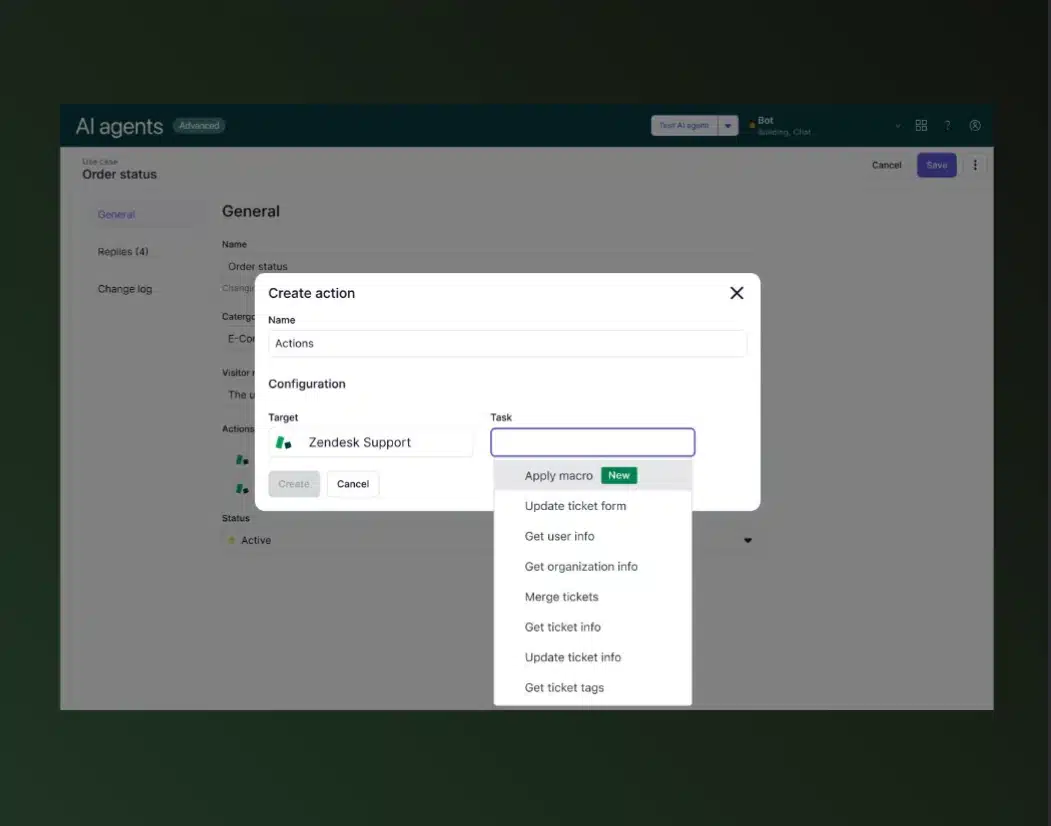
Action Builder for Zendesk AI Agents

Action Builder Early Access

  • Action Builder provides a visual way to create actions and integration workflows.
  • Data from connected systems can be retrieved, processed and passed to subsequent steps.
  • As Action Builder remains in the Early Access Program, its capabilities and availability should be checked for the specific Zendesk account.

Example: Check an order, retrieve the shipping status through an API and return the tracking link to the AI Agent.
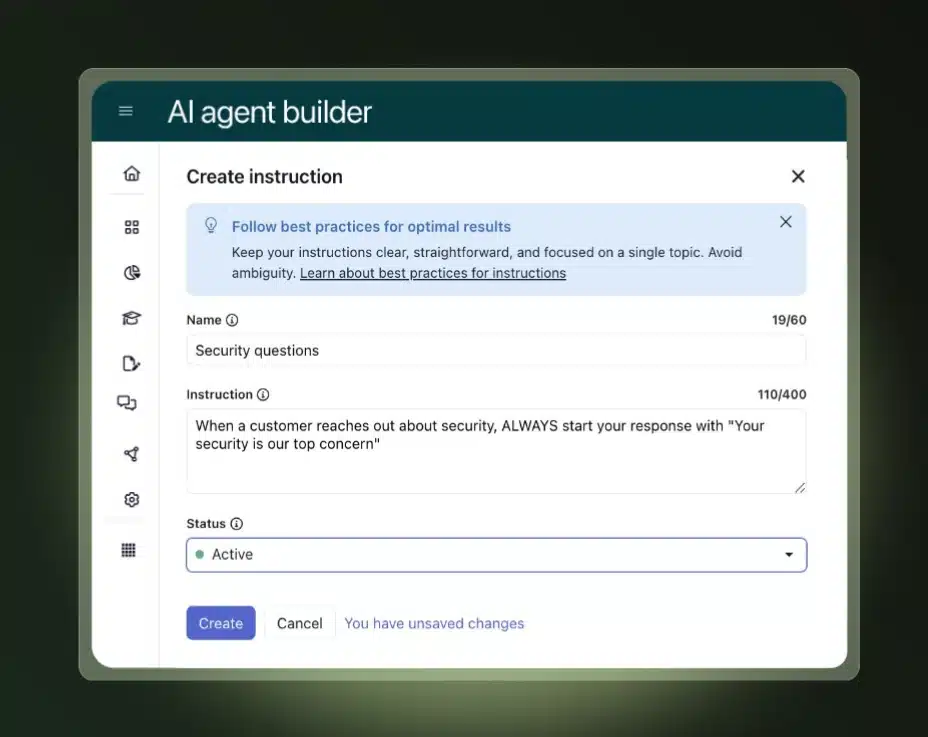
Configuring instructions in the Zendesk AI Agent Builder

Security and control

AI Agents operate autonomously only within defined limits. Clear rules, restricted permissions, targeted testing and controlled handovers keep you in control.

  • Clear instructions: Goals, rules, exceptions and prohibited actions are defined before launch.
  • Restricted permissions: The AI Agent can access only approved knowledge sources, API endpoints and system functions.
  • Testing before launch: Standard requests, edge cases, missing data and errors in connected systems are tested systematically.
  • Controlled handovers: If the AI Agent cannot or must not complete a request, it hands the case over to the appropriate service team with all the information collected so far.
Zendesk AI Agents in action

See how an AI Agent handles a “Where is my order?” request autonomously, from recognising the intent to providing the right answer.

This clip comes from our webinar “Zendesk Advanced AI Agents: A Reality Check”, covering use-case setup, knowledge, APIs and real-world capabilities.

Watch the full webinar on YouTube (in German with English subtitles, recorded in October 2025)

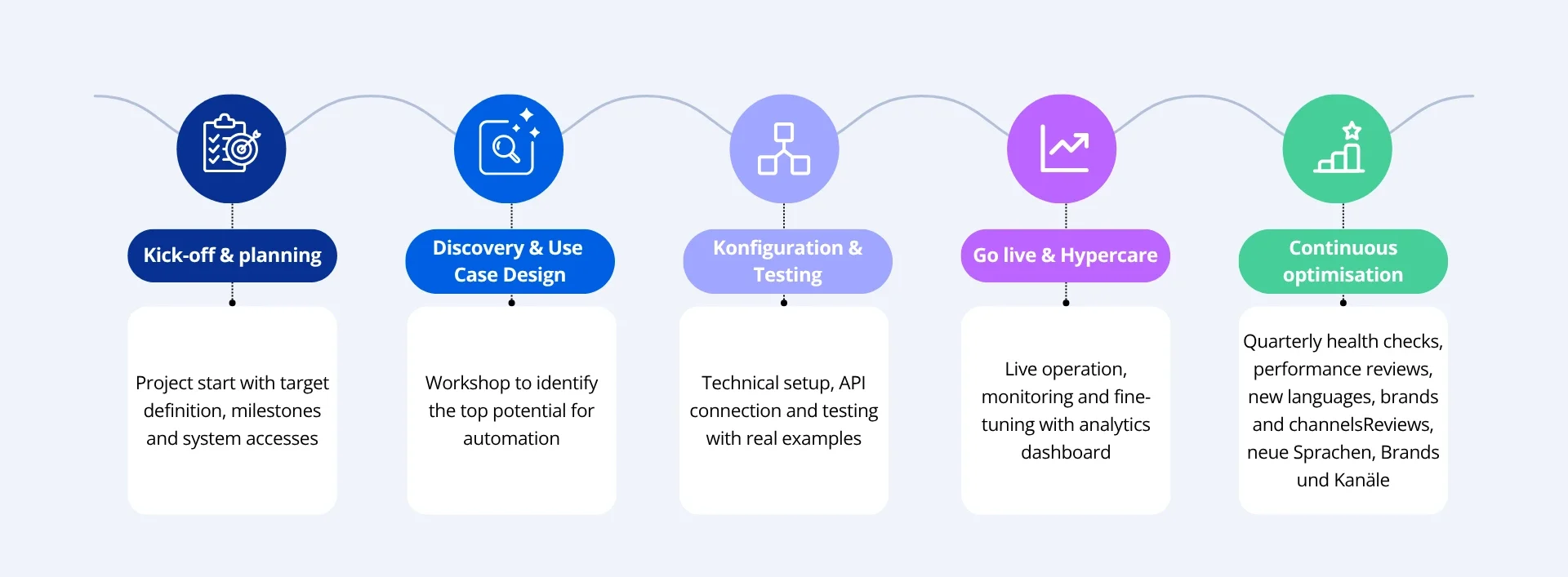
Our roadmap: Go live quickly, scale securely

For a clearly defined first use case, going live in around six weeks is realistic. The actual timeline depends on factors such as knowledge, data quality, integrations and internal coordination.

Leafworks + Zendesk AI Agent: Roadmap

After launch, we measure which requests the AI Agent resolves, where information is missing and which cases it hands over. Based on these results, we improve the knowledge sources, procedures and integrations before expanding the setup to additional use cases or channels.

Leafworks by your side

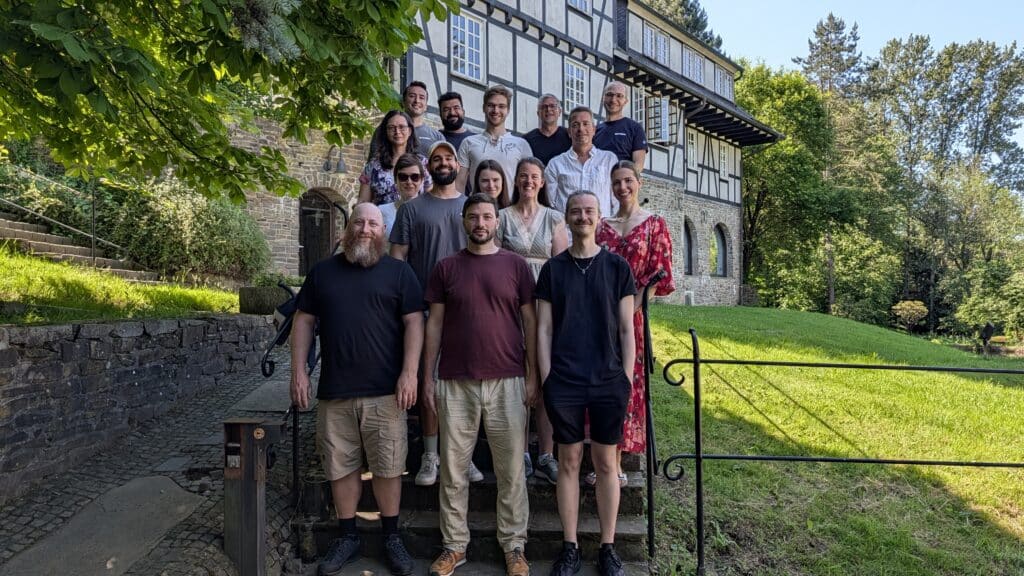
Leafworks is the largest Zendesk Premier Partner in the DACH region and certified for AI Agents. With experience from around 1,000 customer service projects, we understand the requirements for processes, data, integrations and reliable live operations.

Here’s what we take care of for you:

  • Selecting and implementing suitable use cases
  • Migrating existing Essential and legacy bots
  • Connecting systems via apps, APIs and middleware
  • Testing, optimisation and ongoing support

Zendesk Premier Partner

What our customers say

We are here to help!

It is easy to get lost in buzzwords and hype when talking about AI Agents. I prefer to start with a concrete case: Which request takes up your team’s time every day? What data would the AI Agent need? And what should it actually complete?

Then we look at your knowledge, workflows and systems together. I will tell you honestly what makes sense to automate, what is still missing and what a realistic first step looks like.

Whether you are planning your first AI Agent, need to migrate existing bots or have hit a wall with your current setup, bring your case to the AI Quick Audit. We will work out the most sensible way forward.

Marvin Post

Marvin Post

Solution Hero

Frequently asked questions about Zendesk AI Agents

Find answers to the most common questions about capabilities, migration, channels, measurement, billing and implementation.

What are Zendesk AI Agents?

Zendesk AI Agents communicate directly with customers. For defined use cases, they recognise the customer’s intent, use approved knowledge, follow defined procedures and perform approved actions in Zendesk or connected systems.

If they cannot or must not complete a request, they hand it over to the service team with the conversation context collected so far.

How do AI Agents differ from classic chatbots?

Classic chatbots usually guide customers through predefined dialogues and decision trees. Modern chatbots can also use AI within these flows.

An AI Agent instead works towards a defined goal and adapts the required steps to each request while staying within established rules. It can combine knowledge, customer data and APIs to complete suitable processes from start to finish.

How do Zendesk AI Agents differ from Copilot?

AI Agents work directly with customers and handle suitable requests autonomously. Zendesk Copilot supports service teams in the Agent Workspace with summaries, suggested replies and recommended actions.

In short, AI Agents automate customer requests, while Copilot helps the service team handle them.

Is the distinction between AI Agents Essential and Advanced still in place?

Zendesk is removing the previous permanent distinction between Essential and Advanced. The new AI Agents experience includes agentic capabilities that were previously associated with Advanced, including Use Cases, Dialogues, Generative Procedures, Actions and API integrations.

The exact capabilities and usage terms can still depend on the Zendesk plan and individual account. See our Zendesk AI overview for more information.

How are Zendesk AI Agents related to Ultimate?

Zendesk acquired Ultimate in 2024 and incorporated its service automation technology into Zendesk AI Agents. Some existing accounts still use Ultimate-based infrastructure or API endpoints during the transition.

Zendesk is migrating these accounts to the new AI Agents infrastructure through the end of 2026. Integrations, knowledge sources and endpoints should therefore be checked for the individual account. Zendesk provides further details in its official migration announcement.

Do existing Essential and legacy bots need to be migrated?

Yes. From 31 August 2026, Essential and legacy functionality will receive maintenance only. Zendesk will remove these features completely on 10 December 2026. Bots that have not been migrated will stop working after that date.

Depending on the setup, an existing bot may need to be rebuilt or transferred to the new environment. Zendesk provides the binding dates and guidance in its official migration announcement.

Which channels do Zendesk AI Agents support?

Zendesk AI Agents can be used for messaging, email, web forms and API-based applications. In the new environment, each AI Agent is configured for one channel type. Messaging and email therefore require separate AI Agents.

Voice AI Agents remain in the Early Access Program and are not yet a generally available standard feature.

Which knowledge sources can AI Agents use?

AI Agents can use approved content from Zendesk Guide, websites, other Zendesk instances and connected external knowledge sources.

Search rules, permissions and the individual use case determine which content the AI Agent can access.

Do Zendesk AI Agents support multiple languages and brands?

Zendesk AI Agents support more than 90 languages. Responses can be generated automatically in the language detected.

Tone, response length, knowledge and procedures can also be configured for different brands.

Can AI Agents connect to e-commerce, ERP or logistics systems?

Yes. If suitable endpoints, authentication and permissions are available, AI Agents can retrieve data from connected systems and perform defined changes.

Common examples include order-status checks, address changes, returns, shipping labels and ticket-field updates. Where required, Leafworks develops suitable Zendesk integrations.

How are the results of a Zendesk AI Agent measured?

Relevant metrics include the Automated Resolution Rate, fully completed requests, handovers, errors, handling times, customer satisfaction and the performance of individual use cases.

Assisted Escalations, Contained Resolutions and Verified Resolutions must be evaluated separately. A request without a handover is not automatically proven to have been fully resolved. Read more in our guide to measuring AI in customer service.

How are Zendesk AI Agents priced and billed?

Some accounts still use the previous Automated Resolutions model. Others have already moved to Resolution Allowances and Resolution Tiers.

Under the new model, only Verified Resolutions count towards the Resolution Allowance. Reporting and billing are therefore not the same. The applicable model must be checked for the individual Zendesk account.

How long does it take to implement a Zendesk AI Agent?

For a clearly defined first use case, going live in around six weeks is realistic.

The actual timeline depends particularly on the quality of the knowledge, the availability of the required data, integrations, permissions and internal coordination.

What should companies consider regarding GDPR and the EU AI Act?

Whether a setup complies with data protection requirements does not depend on the product alone. Contracts, data flows, retention, permissions, integrations and the data actually processed must be assessed together.

Direct interactions with AI Agents must also be labelled transparently. Key transparency obligations under the EU AI Act have applied since 2 August 2026. Read more in our guides to the EU AI Act in customer service and GDPR and data protection in Zendesk.

Do companies need a Zendesk partner to implement AI Agents?

No. Companies can configure Zendesk AI Agents themselves. External support is particularly useful when existing bots must be migrated, several systems need to be connected or complex workflows require reliable testing.

Leafworks supports use-case selection, migration, configuration, integrations, testing and ongoing optimisation.

Leafworks Blog

Scroll to Top